Do I Need a Subfloor to Lay New Flooring?
When you’re planning new flooring, it’s easy to focus on colours, patterns and finishes. But the real hero of a long-lasting floor is the bit you don’t see… the subfloor.
So, do you actually need a subfloor to lay new flooring in your Edinburgh or Lothians home?
Short answer: yes – you need a sound, prepared subfloor of some kind for every installation. How we deal with it depends on what’s already there.
What is a subfloor?
The subfloor is the solid layer your new flooring sits on. It might be:
- Concrete slab
- Floorboards
- Existing chipboard
- Plywood or screed laid over an older surface
LVT and laminate don’t go straight onto bare, rough, or bouncy surfaces. They need a flat, solid, clean base underneath.
Why subfloor prep matters so much
If the subfloor isn’t right, you’ll almost certainly see problems later:
- Visible dips, bumps or ridges
- Click joints separating
- Boards creaking or moving
- Premature wear and damage
Think of it like building a house – if the foundations are weak, the whole thing suffers. Your flooring is only as good as the surface it’s laid on.
Common subfloor situations we see
1. Old floorboards
Typical in Edinburgh tenements and older homes.
We’ll usually:
- Check for loose or damaged boards and fix them
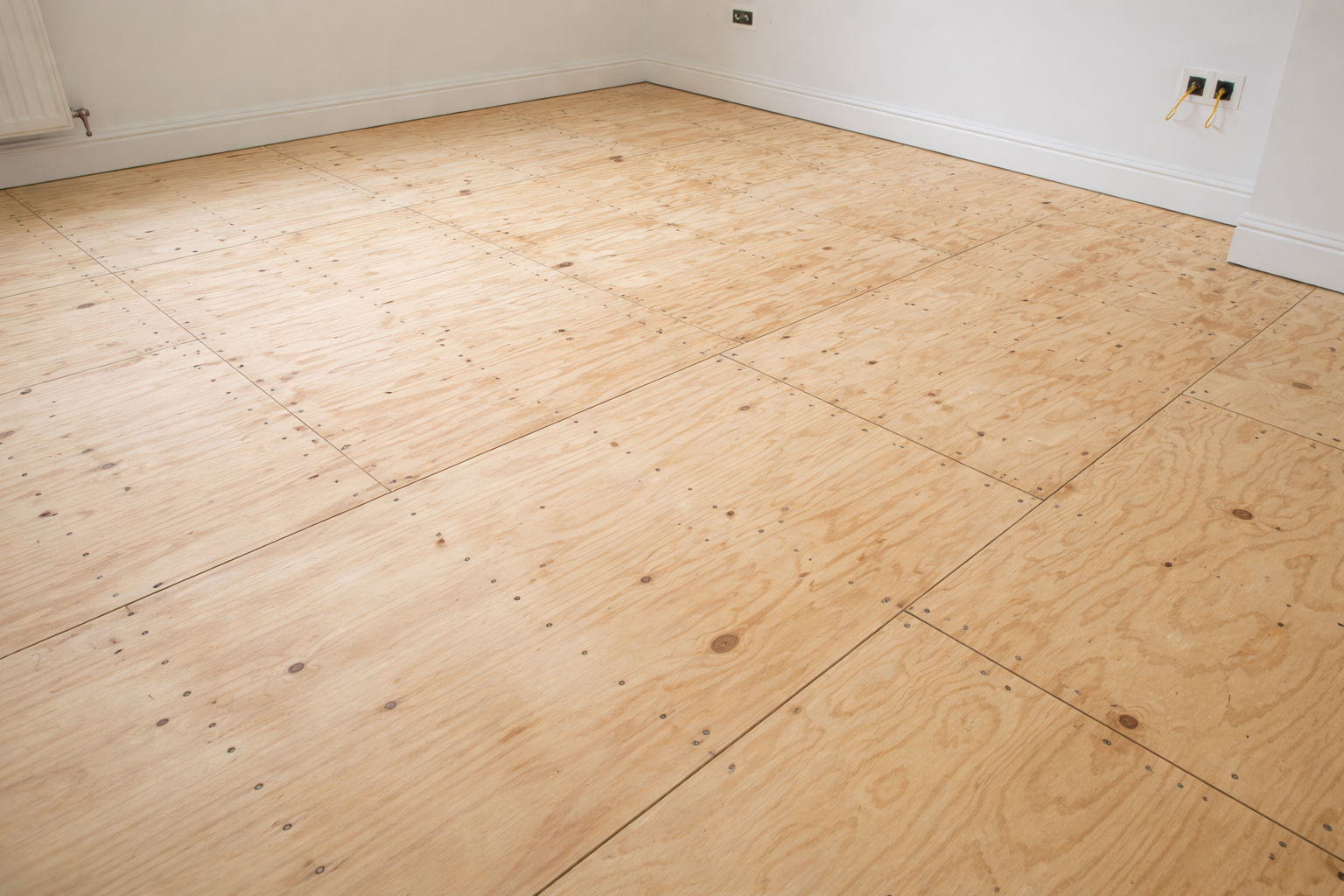
- Overboard with plywood to create a smooth, level surface
- Then lay your chosen LVT or laminate on top
2. Uneven concrete or screed
Common in extensions, kitchens or ground floors.
We may:
- Use a self-levelling compound to smooth out dips
- Check moisture levels (vital for LVT in particular)
- Add the correct underlay before fitting the new floor
3. Existing vinyl, tiles or laminate
Sometimes we can go over the top, sometimes it needs removed.
We’ll assess:
- Is the existing floor solid and flat?
- Is its height going to cause problems at doors or stairs?
- Is there any movement, damage or damp underneath?
If it’s not 100% sound, we recommend taking it back to a proper subfloor and starting fresh.
Do I always need extra sheets or screed?
Not always – but you always need the subfloor to be:
- Level within manufacturer tolerances
- Dry enough (especially for LVT)
- Firm, with no movement or flex
Sometimes that means extra plywood, screed, or repairs. Sometimes a simple clean and the right underlay is enough. The key is a proper survey, not guesswork.
How we help at Edinburgh & Lothians Flooring Company
When we quote for new flooring, we don’t just measure and run. We:
- Inspect your existing subfloor – boards, concrete, or existing coverings
- Check for movement, uneven areas and moisture
- Recommend the right preparation – ply, screed, repairs or underlay
- Price it clearly so you know exactly what’s involved
That way, your new LVT or laminate floor not only looks amazing on day one, it keeps performing for years.
Thinking about new flooring?
If you’re in Edinburgh or the Lothians and not sure if your floors are “ready” for new LVT or laminate, we can come out, assess the subfloor properly, and give you honest advice.
Get the base right, and your new floor will look better, feel better, and last longer.